How to Choose the Perfect Party Dress for Every Occasion?
Choosing the perfect Party Dress is less about following trends and more about reading the occasion correctly. A rooftop engagement party, winter gala, and relaxed birthday dinner demand different decisions. Venue, time, weather, dress code, movement, and personal comfort all matter. The ideal dress should look polished under photographs and feel practical after several hours of standing, greeting, and dancing.
Industry evidence supports a more thoughtful approach. The State of Fashion 2025, published by The Business of Fashion and McKinsey & Company, describes cautious consumer spending and stronger demand for value. That insight changes how partywear should be judged. A beautiful dress must offer repeat-wear potential, reliable construction, and enough comfort to justify its price. Euromonitor International’s apparel research also highlights consumers’ growing interest in quality, versatility, and more responsible purchasing. A dress worn once may look exciting, but it is not always the smartest choice.
Christian Dior wrote, “Simplicity, good taste and grooming are the three fundamentals of good dressing.” His advice remains useful, although it is not a complete formula. Color, fabric, proportion, and accessories still need personal testing. A satin midi may glow beneath warm restaurant lights but crease quickly during dinner. A structured velvet dress can suit a winter ceremony, yet feel excessive at an outdoor summer gathering.
There is no universal answer. That is the difficult part. This guide will help you compare silhouettes, fabrics, colors, and styling choices for every occasion. It will also question a common mistake: choosing a dress for the photograph, rather than for the actual experience.
Understanding Party Dress Codes and Occasion Types
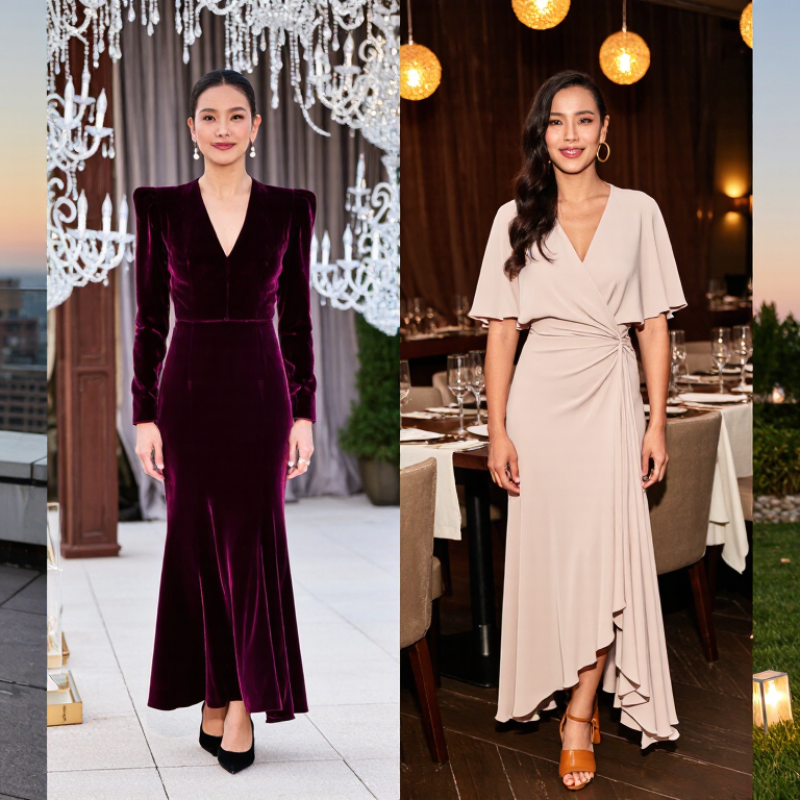
Choosing the perfect party dress begins with understanding the dress code and occasion. A cocktail event usually calls for a polished knee-length or midi dress, refined shoes, and restrained accessories. Black-tie occasions require greater formality, often through a floor-length dress, elegant fabric, and evening-appropriate details. The venue also matters. A hotel ballroom feels different from a garden terrace.
Read the invitation carefully for clues about time, location, and wording. Daytime weddings suit lighter colors, breathable fabrics, and modest silhouettes. Evening celebrations can support deeper shades, subtle shine, and more dramatic tailoring. For office parties, choose a dress that feels festive but remains professional, especially around colleagues and clients. Avoid anything that needs constant adjustment. Comfort affects your posture and confidence.
Tips: Check the venue before choosing shoes. Test the dress by sitting, walking, and lifting your arms. Bring a light layer for changing temperatures. Match accessories to the event’s formality, not only to the dress. I once chose a beautiful outfit that looked too formal for a casual gathering. It taught me that elegance without context can feel misplaced. Dress codes are not always clear, so asking the host is sensible. When details remain vague, choose the more polished option and keep the styling simple. A reliable dress should help you enjoy the occasion, not make you monitor every movement.
Choosing a Dress Style That Suits the Event
The event should guide your dress style before personal taste takes over. A daytime garden party usually suits light colors, breathable fabrics, and a relaxed midi silhouette. For an evening celebration, deeper tones and refined textures create a more suitable impression. Read the invitation carefully. Words like “cocktail,” “formal,” or “festive” describe the expected level of polish.
The venue also matters. A fitted dress may look elegant indoors but feel restrictive on a crowded dance floor. I once chose a beautiful dress with narrow sleeves and spent the evening adjusting it. Now, I test movement before wearing anything: sitting, walking, lifting my arms, and stepping outside. Comfortable shoes and secure fastenings are practical details, not minor decorations. Check the weather, too. Satin can crease quickly, while heavy fabric may feel uncomfortable in warm air.
Your dress should reflect the occasion without competing with it. Weddings often call for polished color and modest styling, while birthday parties allow brighter patterns and playful shapes. When the dress code feels unclear, ask the host rather than guessing. That small step prevents an awkward choice. I still sometimes favor a dramatic style over a practical one, so a second opinion helps. The best choice balances confidence, respect for the setting, and enough comfort to let you participate naturally.
Matching Fabrics, Colors, and Patterns to the Setting
Choosing the perfect party dress starts with reading the setting, not following every fashion rule. In my experience, fabric changes the entire impression of an outfit. Lightweight chiffon suits a garden gathering because it moves easily in a warm breeze. Satin reflects candlelight beautifully at an evening dinner, but it can reveal wrinkles quickly. Velvet feels luxurious in colder months, although it may become uncomfortable in crowded rooms.
Color should respond to the atmosphere and lighting. Soft blue, muted green, or floral shades work well for daytime celebrations. Deep red, navy, and plum often look polished under evening lights. Very pale colors can appear washed out in photographs, especially near bright windows. I once chose a cream dress for an outdoor event and regretted it after sitting on damp grass. Practical details matter.
Patterns also need to match the occasion’s energy. Small florals feel relaxed, while geometric prints create a sharper impression. For formal settings, choose controlled patterns with generous space between motifs. Busy designs can compete with jewelry, shoes, and the room itself. A simple test helps: view the dress from several steps away, then check it under the event’s lighting. If the pattern is the first thing you notice, it may be too strong. I still sometimes choose a bold print and question it later. Personal taste does not always behave logically.
How to Choose the Perfect Party Dress for Every Occasion
Matching fabrics, colors, and patterns to the setting
Outdoor Day Parties
Choose linen or cotton for airflow and moisture management. Light, soft colors and small-scale prints complement natural daylight.
Indoor Evening Events
Silk creates a fluid, polished look, while deeper colors and refined geometric or solid patterns suit low-light settings.
Formal Winter Gatherings
Wool offers warmth and structure. Jewel tones, darker neutrals, and restrained patterns help create a formal silhouette.
The chart compares approximate standard moisture-regain values at 65% relative humidity and 21°C. Higher moisture regain generally indicates greater capacity to absorb atmospheric moisture; actual garment performance varies with construction and finishing.
Coordinating Accessories, Shoes, and Seasonal Details
A perfect party dress begins with the occasion, but accessories often decide whether the outfit feels polished. For a formal evening, choose refined earrings and a small structured clutch. Let one detail shine; too many competing pieces can make the look feel busy. For a relaxed celebration, a simple pendant or colorful scarf can add personality without overwhelming the dress. I once matched every accessory too closely, and the result looked planned rather than natural.
Tips: Match the metal tone with your dress details, but do not treat this as a strict rule. Warm metals usually complement earthy colors, while cool metals suit icy shades. If the dress has sequins or dramatic sleeves, keep jewelry quieter. Comfortable shoes matter more than impressive shoes after several hours. Low heels, cushioned sandals, or elegant flats can still look intentional.
Seasonal details should support comfort and movement. In winter, add a tailored coat, opaque tights, or velvet texture without hiding the dress completely. For summer parties, select breathable fabric and shoes that will not slip on warm pavement. Spring welcomes soft colors and lightweight layers, while autumn suits deeper tones and closed-toe footwear. Test the full outfit at home, including the bag and coat. Walk, sit, and check the mirror from different angles. Small flaws often appear then.